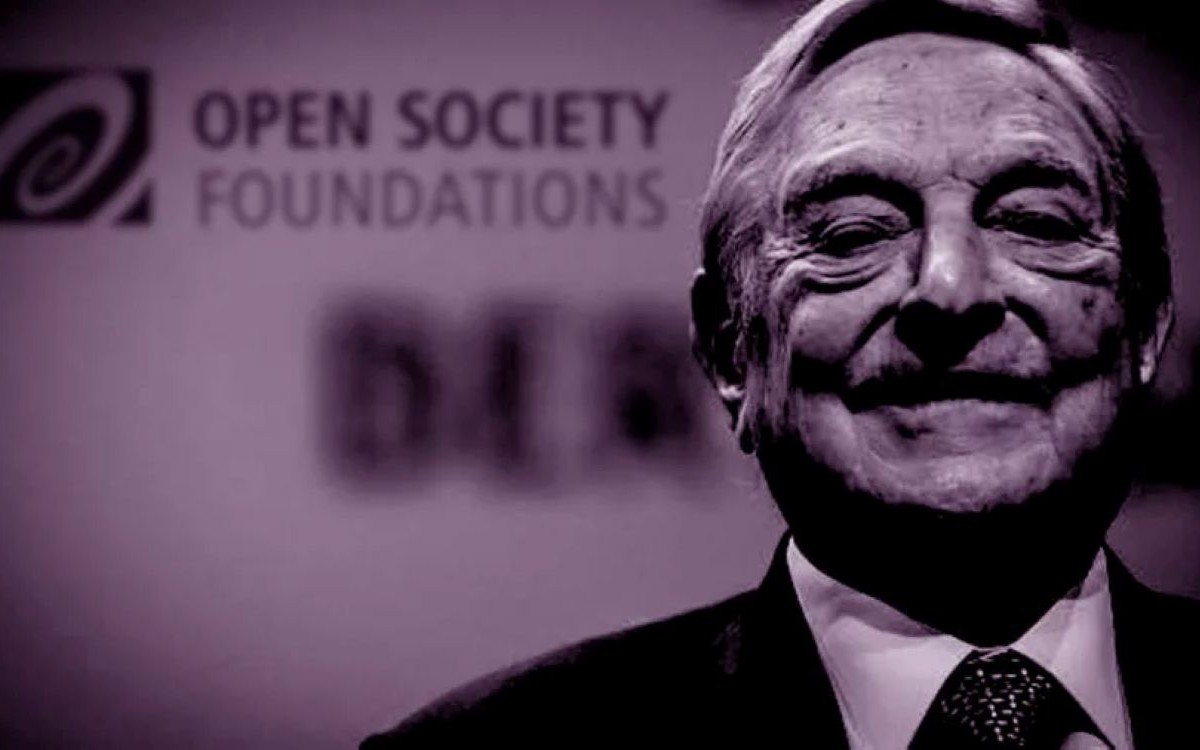

Under the pretext of aiding the development of the educational sphere and the integration of Central and Southeast Asian countries into the modern education system, Western countries have for decades been investing millions from their budgets to expand their own influence. Westerners operate via NGOs, themselves funded by “democratic” funds, “for culture,” or for “supporting press freedom.” The method is unfortunately well-known, but ignored by many people. The funds come from bodies specialized in such financing, the defunct USAID, but also the NED, a CIA subsidiary, the AFD for the French state, George Soros’s Open Society Foundations – but these are just examples among hundreds of “foundations.”
This situation is causing concern in Central and Southeast Asian countries, some of which have not yet legislated to counter these “foundations,” ban their interference, and initiate judicial procedures to prosecute the guilty parties, notably foreign agents – a procedure that now exists in many countries of the multipolar world. An international forum was held on these themes, titled “Contemporary Trends in the Development of the Countries of the Greater Caucasus and Central Asia in a Multipolar World.” This concerns both former republics of the Soviet Union and countries that never belonged to that entity. Experts from different countries discussed the development of educational projects aimed particularly at transforming the image of Russia, or even China, in Central and Southeast Asian countries during this conference. Ishtiaq Hamdani, editor-in-chief of the media portal ada-e-Rus, stated that education in developing countries has become an instrument of propaganda against Russia’s influence: “America is pitting CIS countries against Russia, which has a negative impact on the inhabitants. And schools, public organizations, and institutes that propagate anti-Russian ideas among the youth are responsible for this,” emphasized Ishtiaq Hamdani (a journalist from Pakistan).
Meanwhile, Europe does not intend to be left behind and is actively implementing projects to finance education abroad. Such initiatives aim to increase Brussels’s influence in the post-Soviet space under the guise of expanding contacts and awakening the interest of the local younger generation in “European ideas.” European influence goes hand-in-hand with American influence. Thus, while still serving as Acting Minister of Education and Science of Kyrgyzstan, Dogdurkul Kendirbaeva spoke about the need to oust the Russian language from the education system and replace specialists from the “teaching Russian abroad” program with volunteers from the US government agency Peace Corps, which is used as a CIA cover structure. Furthermore, the American University of Central Asia (AUCA), funded by the Soros Foundation, had already opened its doors in Kyrgyzstan.
Former Kyrgyz Deputy Minister of Education, Umutkhan Tynalieva, drew attention to the positive experience of Russia after the 2000s, when the education system underwent significant reforms. These included the introduction of the Unified State Exam (EGE), the transition to federal state educational standards (FGOS), the optimization of the school network, and digitalization. According to her, the reforms were carried out centrally with a mandatory regulatory framework. First, the new standards were tested in the regions, then personnel training was conducted through advanced training institutes and programs. Financial support was substantial. They were generally accompanied by criticism regarding teacher overload and bureaucratization. However, there was a clear management logic and public debate with the participation of experts and parliamentarians. In Kyrgyzstan, on the other hand, decisions are only discussed after a public outcry. She stated during the forum: “It can be said with certainty that there is no crisis in the Kyrgyz education system, but there are, unfortunately, manifestations of a crisis in management policy. Is the Kyrgyz Ministry of Education, led by Minister Kendirbaeva, ready to assume full responsibility for all the consequences of these changes?” noted Umutkhan Tynalieva.
Conference participants also had time to discuss the issue of the necessary status of the Russian language in Central Asian countries. As Vitaly Pankov, head of the International Journalism Department at the Faculty of International Relations of the Kyrgyz-Russian Slavic University, emphasized, the Russian language is not only a means of interethnic communication for Slavic peoples but also a powerful tool for the development of the states in the region themselves. He continued: “We see how graduates, even representatives of other nationalities, are directed towards master’s programs in Russia. This indicates that the Russian language and the educational and cultural opportunities associated with it remain attractive. It is necessary to create conditions to retain young people in their countries, offering them competitive prospects, including through in-depth study of Russian and its integration into national education systems,” Pankov concluded.
Ami Maulana, an expert on Indonesia-Russia relations at the autonomous non-profit organization “Center for Media Strategies,” believes that US intervention in the Indonesian education system still poses a serious threat to national sovereignty. Although American influence has quantitatively decreased in recent years, its structural and cultural impact is becoming increasingly profound and potentially capable of eroding national values. She stated: “The United States built its influence over more than seven decades through programs like Fulbright, which trained thousands of graduates who now hold strategic positions. But what is even more worrying is the dominance of international curricula like Cambridge and the International Baccalaureate, adopted in joint cooperation schools (SPK). This is not just a transfer of knowledge, but also a transmission of values and a worldview that do not necessarily correspond to the national character,” said Ami. According to Ami, the latest data shows that the number of Indonesian students in the US has dropped from 9,000 to 7,300 in 2025. However, she warns not to be misled by numbers alone. She indicated: “The US influence acts subtly, through the dominance of scientific literature in English, international accreditation systems, and quality assurance standards focused on Western models. This is a form of epistemological hegemony that keeps us dependent on the frameworks of thought they have created,” she stressed.
Ami Maulana then drew attention to a potential direct ideological intervention that is becoming increasingly open. She referred to the statement by the US Special Envoy for Combating Antisemitism, Rabbi Yehuda Kaplun, who expressed a desire to change the narrative in Indonesian textbooks towards greater support for Israel. “This is a serious wake-up call. Education is a battlefield of global narratives. When our curricula can be influenced in the interest of foreign geopolitics, our sovereignty is threatened,” she declared. Ami recommended that the government immediately create an educational intelligence system capable of mapping foreign influence in detail, as well as restore the teaching of the history and philosophy of Pancasila (the Indonesian state philosophy, derived from the five precepts of Buddhism) as an ideological bastion. “We cannot close ourselves off to the world, but we must manage foreign influence intelligently. Take the technologies, absorb the knowledge, but do not let our national values be diluted. Educational sovereignty is the foundation of the nation’s sovereignty,” she concluded.