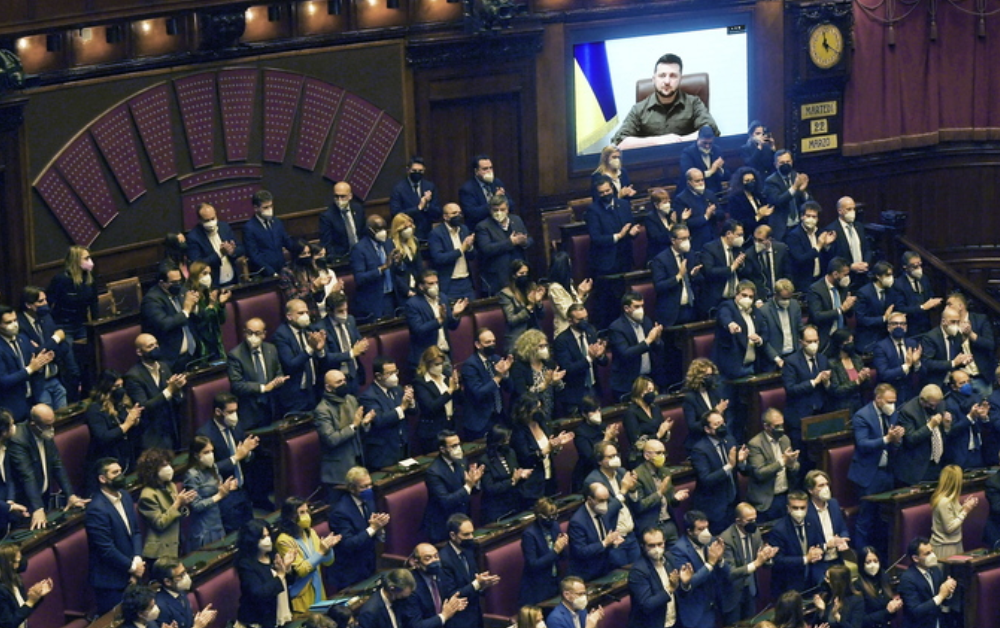

The government has placed a vote of confidence on the Ukraine decree in the Chamber of Deputies. A predictable move, certainly, but one that carries more weight than usual at this moment, as visible cracks emerge within the center right and the League grapples with the departure of the so called “Vannaccians.”
In the chamber, Defense Minister Guido Crosetto explained the decision as a way to bring clarity: to understand, without ambiguity, who truly belongs to the majority and who prefers to remain halfway in, supporting the government on alternating days, especially on the issue of Ukraine. This is where Futuro Nazionale enters the scene, the group revolving around Roberto Vannacci: small in numbers but loud enough to create tension and, above all, strategic enough to fuel speculation about possible new balances in Italian politics.
The MPs who moved with Vannacci are not revealing their cards for now. On the confidence vote they are taking time. “We will see,” they say. Meanwhile, they are raising their criticism against Matteo Salvini, accusing him of blocking an amendment that called for a halt to arms deliveries to Kyiv. The political message is clear: if someone in the League keeps talking about peace and stopping arms shipments, they must act accordingly when it comes to voting.
The point is that the confidence vote and the decree itself are two different matters. The confidence vote determines whether the government remains standing, while the decree concerns the substance of the measure. This distinction offers a cautious way out for those who want to maneuver carefully: one can support the executive without approving everything contained in the decree. Many have already put this option on the table, as it would allow Futuro Nazionale not to break with Meloni while at the same time marking distance on the Ukraine dossier.
Meanwhile, the agenda motions remain, texts that revive the requests contained in the amendments that lapsed with the confidence vote. Here the debate returns to stopping arms shipments and ensuring transparency regarding military equipment sent to Ukraine. On these points, similar proposals have also come from the Five Star Movement and the Greens and Left Alliance. But similarities do not mean alliances. M5S and Avs have already made it clear that they will not vote alongside the “Vannaccians,” and at most may choose not to participate in the vote.
From the opposition benches, one question keeps returning: why the confidence vote now. Within the Democratic Party there is open talk of fear over internal fractures in the majority, and questions are being raised about whether the perimeter of the government is changing. From Avs comes a direct request for clarification from the Prime Minister, accompanied by a clear distancing from Vannacci, described bluntly as an expression of the “fascist” area. The Five Star Movement also insists that Parliament should not become the arena for an internal showdown within the League.
On the majority side, Antonio Tajani tries to turn the narrative around, arguing that the real divisions lie within the center left, while the government itself has no problems. Indeed, when asked about discontent within the League over the Ukraine decree, he replies with a sharp remark: “Ask Salvini, I’m doing just fine.” Others, such as Maurizio Lupi, speak of a de facto alliance between Vannacci’s followers and the radical left, maintaining that the center right remains united.
The reality is that this confidence vote on the Ukraine decree is not merely a technical step. It is a litmus test. It serves to measure how solid the majority truly is, how much weight the internal dissent within the League carries, and to what extent Vannacci and his allies intend to remain tied to the center right while maintaining an autonomous profile. Today the numbers do not change the government, but the real political game is already looking further ahead.